Exploring the Future of Drive Technology: How Magnetic Levitation High-Speed Motor Rotors Are Reshaping Industrial Energy Efficiency?
Driven by the dual imperatives of Industry 4.0 and the "carbon peak & neutrality" goals, high-speed rotating machinery is evolving towards greater efficiency, precision, and environmental friendliness. In this process, the magnetically levitated high-speed motor rotor, as a core component, is quietly sparking a revolution in transmission technology. Today, we will unveil its mysteries and introduce you to a key player in this field: Hangzhou SDM Magnetics Co., Ltd.
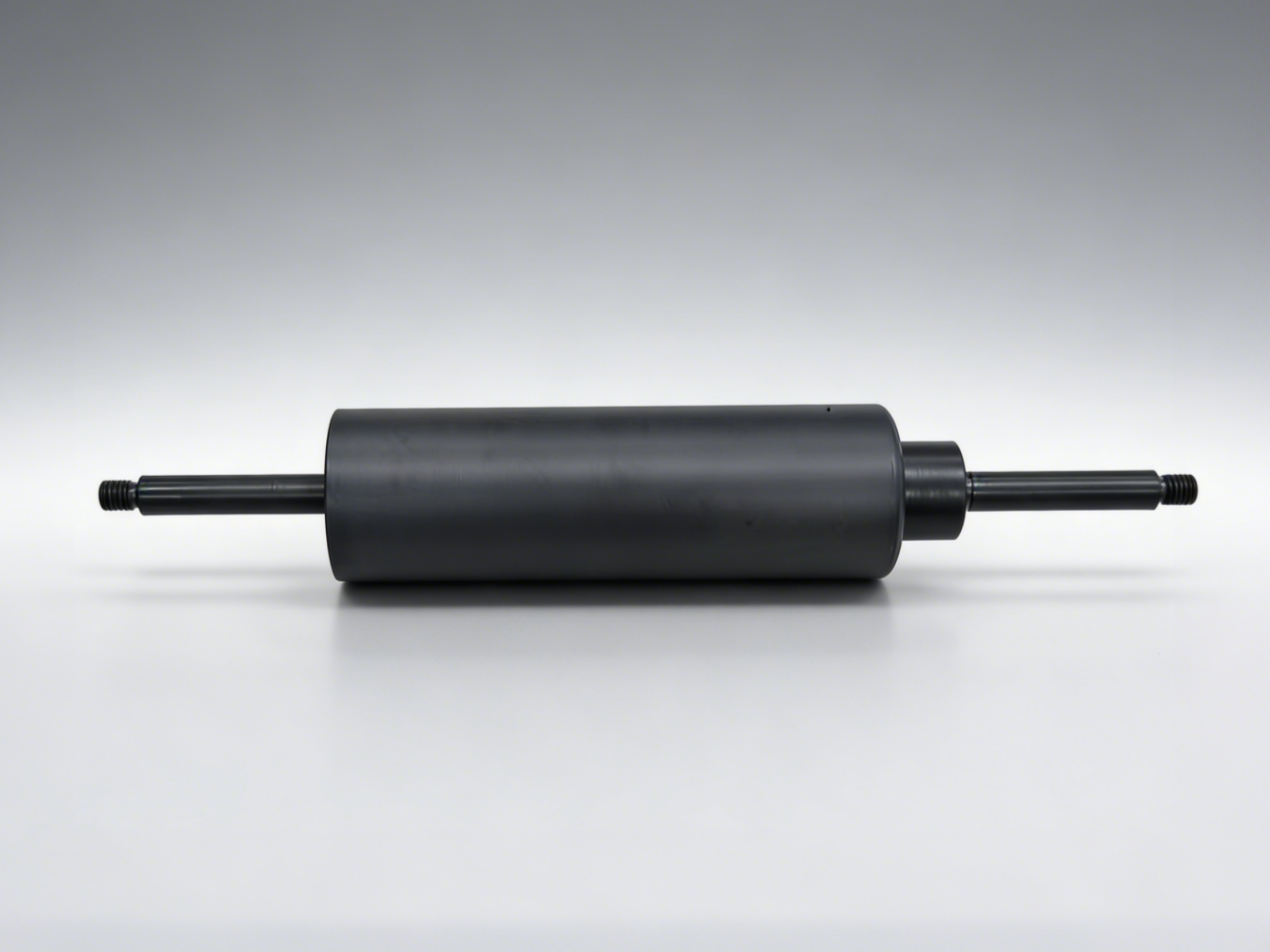
Breaking Free: From "Mechanical Contact" to "Flying in Mid-air"
Traditional high-speed motors are limited by the physical limits of mechanical bearings. Bearing friction not only causes energy loss but also requires complex lubrication and cooling systems, and more critically, it restricts further increases in rotational speed.
The emergence of magnetic bearings has completely changed this situation. They use controllable electromagnetic forces to suspend the rotor in the center of the stator, achieving contactless operation. This is not merely a change in support method, but a sophisticated closed-loop control system composed of electromagnets, sensors, controllers, and power amplifiers, which monitors and adjusts the rotor's micron-level displacement in real-time, ensuring stable suspension of the rotor in five degrees of freedom (four radial degrees and one axial degree).
To use a vivid analogy: a traditional rotor is like a race car speeding on a rough road, while a magnetically levitated rotor is like flying close to the ground on a magnetic "vacuum track."
Core Secrets: The Ultimate Challenge of the Rotor
The rotor is one of the most critical components in a magnetic levitation high-speed motor system. It must not only withstand immense centrifugal forces (speeds often exceeding tens of thousands or even hundreds of thousands of revolutions per minute) but also work in perfect harmony with the active magnetic bearing system.
1. Material Foundation: High-speed rotation imposes stringent requirements on the strength and uniformity of materials. High-quality permanent magnet materials are the foundation for the rotor to generate efficient kinetic energy.
2. Dynamics Design: Rotor design must incorporate precise rotor dynamics analysis to ensure smooth operation when crossing critical speeds and to avoid resonance.
3. Thermal Management: At high speeds, heat generated by eddy current losses is a significant challenge. Efficient heat dissipation designs (such as hollow structure cooling, application of carbon fiber sleeves) are key to ensuring stability.
Application Prospects: The Green Core of a Trillion-Dollar Market
According to QYResearch, the global market for magnetic levitation ultra-high-speed motors was valued at approximately 852 million USD in 2024 and is projected to reach 2.072 billion USD by 2031, exhibiting a compound annual growth rate (CAGR) of 13.6%.
This growth is underpinned by its wide application in high-end fields:
· Wastewater Treatment & Environmental Protection: Magnetic levitation blowers account for 50%-60% of energy consumption in wastewater treatment. By adopting high-speed direct-drive motors, energy savings of over 30% can be achieved compared to traditional Roots blowers, along with lower noise.
· Aerospace: In the context of more/all-electric aircraft, magnetic levitation motors are key enablers for high-speed starter/generator systems.
· Semiconductor & Medical: Due to their oil-free operation and zero-pollution characteristics, magnetic levitation equipment offers irreplaceable advantages in fields such as precision electronics, biopharmaceuticals, and artificial heart pumps.
Company Profile: Hangzhou SDM Magnetics – The "Hidden Champion" in Magnetic Materials
In the upstream segment of the magnetic levitation motor industry chain, there is a company that is not only a magnet manufacturer but also a provider of magnetic circuit solutions: SDM.
As one of China's most comprehensive magnet manufacturers, SDM possesses 16 years of professional expertise. Why are they a crucial force behind magnetically levitated rotors?
1. Top-Tier Scientific Backing:
The company's technical team maintains close industry-academia-research cooperation with top-tier institutions like the Ningbo Institute of Materials Technology and Engineering, Chinese Academy of Sciences. They can perform finite element analysis (FEA) and magnetic circuit optimization design tailored to the specific needs of magnetic levitation motors.
2. Strong Industrial Chain Guarantee:
SDM has a strategic cooperation with CHINALCO, China's largest rare earth mining enterprise, ensuring a robust supply and security of rare earth raw materials. In an era where rare earth resources are increasingly precious, this is a cornerstone for reliable delivery.
3. Focus on Core Magnetic Levitation Components:
Specifically targeting the cutting-edge field of magnetic levitation motors, SDM not only provides high-quality permanent magnet materials but also delves into developing integrated solutions for micro special motor stators and rotors. They deeply understand the extremely high demands that magnetically levitated rotors place on magnetic field uniformity and high-temperature stability, continuously refining the consistency and reliability of their products.
4. International Quality Certifications:
The company has passed stringent system certifications such as IATF 16949 and ISO 9001, and its products comply with RoHS and REACH standards. Since 2010, serving as a tier-two supplier to General Motors, they have achieved a delivery record of zero defects (0 PPM), signifying that their quality control has reached internationally competitive levels.
Conclusion
Magnetic levitation technology is redefining the limits of "rotation." From a single small magnet to a complete magnetic levitation rotor system, the journey represents an ultimate exploration of materials science and a persistent pursuit of precision manufacturing.
If you are seeking magnetic levitation motor rotors and magnetic components backed by strong scientific research support, a stable rare earth supply, and international quality certifications, SDM will be a trustworthy partner for you.


