SDM Magnetics provides eddy current sensors for high-precision, non-contact measurement of displacement, position, vibration, and rotational speed. Designed for demanding industrial environments, these sensors offer high sensitivity, fast response, strong anti-interference capability, and reliable long-term operation for monitoring and fault diagnosis of rotating machinery and other critical equipment.
Eddy Current Sensors for High-Precision Non-Contact Measurement
What Are Eddy Current Sensors?
Eddy current sensors are non-contact measurement devices based on the eddy current effect. They are widely used to detect displacement, distance, position, vibration, gap, and rotational speed of conductive targets. Because the sensor does not need to physically touch the measured object, it allows stable measurement with reduced wear and long service life. Public industrial sensor pages consistently describe eddy current sensors as a preferred solution for displacement, position, and vibration measurement where high precision is required.
At SDM Magnetics, our eddy current sensors are developed for industrial users who require reliable and precise monitoring in complex working conditions. They are particularly suitable for online monitoring and condition analysis of rotating machinery, where stable signal output and long-term performance are essential.
Key Advantages of Eddy Current Sensors
One of the main advantages of eddy current sensors is non-contact measurement. This helps reduce mechanical wear and ensures stable operation over time. These sensors also offer high sensitivity, fast response speed, and high resolution, making them suitable for applications requiring continuous and accurate monitoring of moving metal components. These same benefits are highlighted across leading industrial eddy current sensor suppliers.
In addition, eddy current sensors perform well in harsh environments. They are commonly used in conditions involving dirt, oil, dust, vibration, pressure, or temperature variation, where optical or contact-based measurement methods may be less suitable. Industrial supplier pages frequently position eddy current sensors as ideal for these demanding environments.
Features and Technical Parameters of Eddy Current Sensors
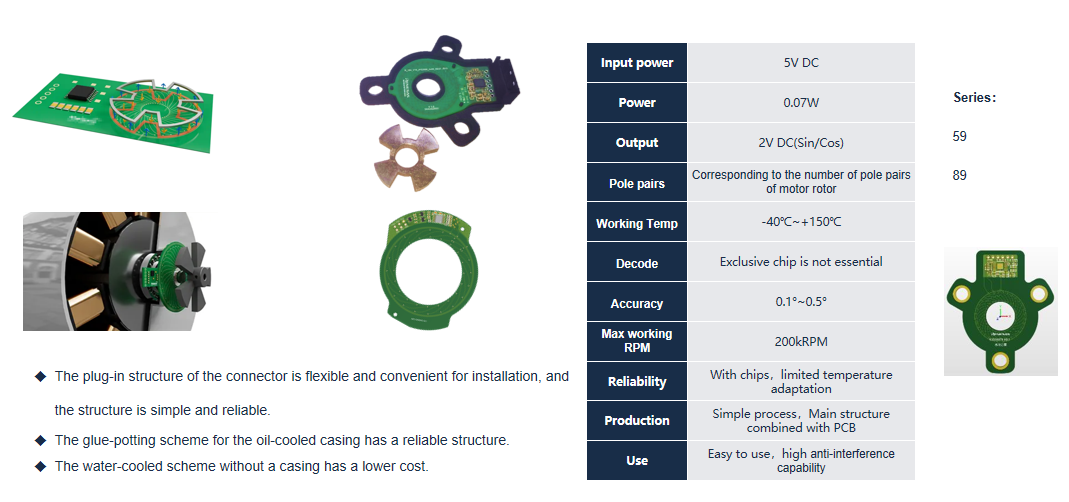
SDM eddy current sensors are designed for non-contact measurement with stable signal output, fast response, and strong anti-interference capability. The compact structure, reliable design, and practical technical configuration make them suitable for industrial monitoring, displacement measurement, and rotating machinery applications.
Designed for Harsh Industrial Environments
Industrial measurement often takes place in environments that are not clean or stable. For this reason, eddy current sensors are widely used in heavy-duty machinery, rotating equipment, and production systems where contamination, oil, coolant, vibration, and thermal variation are present.
SDM eddy current sensors are designed for:
High-precision non-contact measurement
Reliable operation in demanding industrial environments
Fast response to dynamic target movement
Strong anti-interference capability
Good long-term stability
Reduced maintenance requirements due to contact-free operation
This makes them a practical solution for real-time machine condition monitoring and predictive maintenance systems.
Structural Design Optimization for Eddy Current Sensors
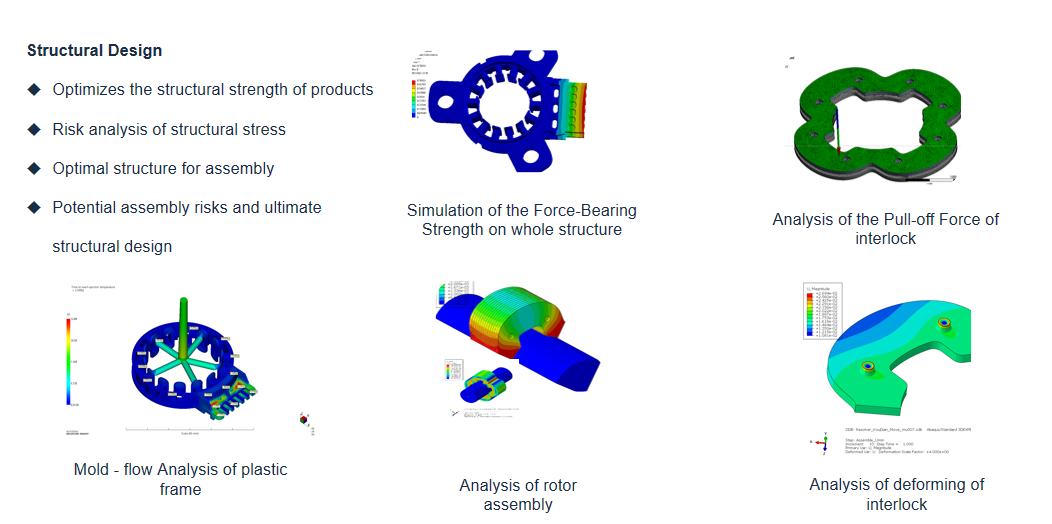
SDM optimizes the structural design of eddy current sensors to improve product strength, assembly reliability, and long-term stability. Through structural stress analysis, mold-flow analysis, and assembly evaluation, we help ensure dependable sensor performance in demanding industrial environments.
Typical Measurement Parameters
Eddy current sensors are commonly used to measure:
Displacement
Position
Gap
Vibration
Oscillation
Rotational speed
These measurement functions are especially important in rotating machinery applications, where small changes in shaft motion or component vibration can indicate developing faults or performance issues. Public supplier pages regularly identify shaft displacement, vibration, and position monitoring as core eddy current sensor applications.
Performance Design and Signal Analysis of Eddy Current Sensors
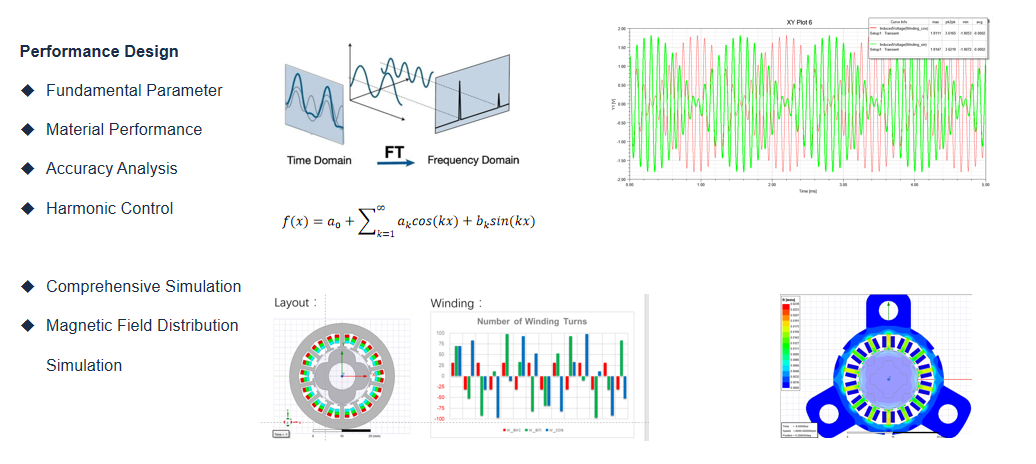
SDM supports performance-oriented design for eddy current sensors, including parameter analysis, accuracy evaluation, harmonic control, and simulation of signal behavior. This helps improve measurement consistency, sensitivity, and overall sensor reliability in complex application conditions.
Typical Applications
SDM eddy current sensors are suitable for a wide range of industrial applications, including:
Machine tools and precision machinery
Automotive manufacturing equipment
Pumps and compressors
Steam turbines and water turbines
Generators and other power equipment
Petrochemical process equipment
Aerospace rotating systems
Metallurgy and transportation systems
Online monitoring and fault diagnosis of large rotating machinery
This application direction aligns well with how industrial eddy current sensor suppliers position their products for plant equipment, rotating machinery, and harsh-environment measurement tasks.
Why Choose SDM Eddy Current Sensors?
With extensive experience in Magnetic Assemblies and industrial sensor solutions, SDM Magnetics focuses on practical eddy current sensing products for monitoring and measurement applications. Our eddy current sensors are designed to provide stable performance, reliable detection, and easy integration into condition monitoring systems and machinery. Key benefits include non-contact measurement, high sensitivity, fast response, strong anti-interference capability, and dependable long-term operation in demanding industrial environments.
Key benefits include:
Non-contact measurement for reduced wear
High sensitivity and fast response
Reliable operation in oily, dusty, and vibrating environments
Strong anti-interference capability
Good long-term stability
Suitable for displacement, vibration, and rotational speed measurement
Support for industrial monitoring and fault diagnosis applications
Customization and Project Support
Different equipment types require different sensor dimensions, mounting structures, measuring ranges, and signal requirements. SDM Magnetics can support customer-specific eddy current sensor solutions according to the actual application environment and installation conditions.
Our support can include:
Sensor structure customization
Application-oriented design adjustment
Project-based technical support
Prototype to production service
Whether the requirement is for rotating machinery monitoring, vibration detection, displacement control, or equipment protection, SDM can help provide a suitable eddy current sensing solution.
Contact Us for Eddy Current Sensor Solutions
If you are looking for eddy current sensors for industrial measurement, online monitoring, or fault diagnosis systems, SDM Magnetics can support your project with reliable products and application-oriented service. Send us your measurement target, installation condition, measuring range, and application details, and our team will recommend a suitable sensor solution.
Technical Features
Item
Description
Product Name
Eddy Current Sensors
Measurement Method
Non-contact measurement based on eddy current effect
High sensitivity, fast response, strong anti-interference capability
Working Environment
Suitable for harsh industrial environments
Typical Targets
Metal conductive objects
Application Focus
Rotating machinery monitoring and industrial measurement
Customization
Yes, project-based support available
Key Features
Non-contact measurement
High sensitivity
Fast response speed
High linearity and high resolution
Strong anti-interference capability
Reliable long-term performance
Suitable for harsh industrial environments
Widely used in rotating machinery monitoring
Typical Applications
Machine tool industry
Automotive manufacturing
Power generation equipment
Petrochemical equipment
Aerospace systems
Metallurgy
Transportation systems
Fault diagnosis of large rotating machinery
FAQ
What are eddy current sensors used for?
Eddy current sensors are used for non-contact measurement of displacement, distance, position, vibration, gap, and rotational speed of conductive targets. They are widely applied in industrial monitoring and rotating machinery diagnostics.
What are the advantages of eddy current sensors?
They offer non-contact measurement, high sensitivity, fast response, strong anti-interference capability, and reliable operation in harsh environments such as oil, dust, pressure, and temperature variation.
Are eddy current sensors suitable for vibration monitoring?
Yes. Eddy current sensors are commonly used to monitor vibration, shaft movement, and other dynamic parameters in rotating machinery and industrial equipment.
Can eddy current sensors work in harsh environments?
Yes. Industrial eddy current sensors are widely used in dirty, oily, high-pressure, and temperature-variable environments where stable non-contact measurement is required.
Can SDM Magnetics provide customized eddy current sensor solutions?
Yes. SDM Magnetics can support project-based sensor customization according to target object, measuring range, installation method, and industrial application requirements.
SDM Magnetics is one of the most integrative magnet manufacturers in China. Main products : Permanent magnet,Neodymium magnets,Motor stator and rotor, Sensor resolvert and magnetic assemblies.
Add
108 North Shixin Road, Hangzhou, Zhejiang 311200 P.R.China