Many buyers have seen a ferrite magnet inside speakers, motors, or small household devices without really knowing why this material is chosen so often. At SDM Magnetics, we work with customers who initially focus only on magnetic strength, but quickly realize that cost stability, corrosion resistance, and reliable performance often matter more in real applications. A ferrite magnet is one of the most widely used permanent magnets for exactly these reasons, offering a practical balance between performance and affordability across industrial and consumer products.
What exactly is a ferrite magnet
Why it is also called a ceramic magnet
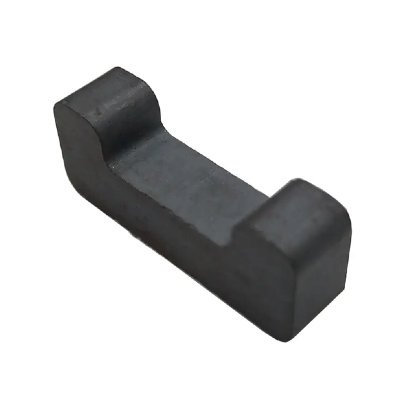
A ferrite magnet is commonly referred to as a ceramic magnet because of the way it is produced and its material composition. Unlike metallic magnets, ferrite magnets are made using a ceramic-like process that involves sintering iron oxide with other compounds at high temperatures. This gives the material its characteristic hardness and brittleness, as well as its matte, dark appearance.
The term “ceramic magnet” helps distinguish it from metallic permanent magnets like neodymium or alnico. In many industries, the two names are used interchangeably, and both refer to the same category of magnetic material.
Is hard ferrite the same as ferrite magnet
Hard ferrite magnet is another common term that refers to the same material. The word “hard” does not describe physical hardness, but rather magnetic hardness, meaning the material has high resistance to demagnetization. This makes ferrite magnets suitable for applications where long-term magnetic stability is required.
In practical use, ferrite magnet, ceramic magnet, and hard ferrite magnet all describe the same family of permanent magnets widely used in mass production.
What makes it a permanent magnet
A ferrite magnet is classified as a permanent magnet because it retains its magnetization after being exposed to an external magnetic field. Once magnetized, it does not require a continuous power source to maintain its magnetic properties.
This makes it ideal for applications where energy efficiency and long-term reliability are important, such as electric motors, sensors, and magnetic separators.
What is a ferrite magnet made of
Iron oxide and strontium or barium compounds
The core material of a ferrite magnet is iron oxide combined with either strontium carbonate or barium carbonate. These raw materials are mixed, calcined, and then sintered into a solid magnetic structure.
This composition plays a major role in the overall cost advantage of ferrite magnets. Iron oxide is widely available and relatively inexpensive compared to rare earth elements, which helps keep production costs stable even in large volumes.
Why the material choice keeps cost stable
Because ferrite magnets do not rely on rare earth materials, they are less sensitive to global supply fluctuations. This makes them particularly attractive for long-term projects or products that require consistent pricing and availability.
For manufacturers producing motors, appliances, or audio equipment in high quantities, this cost stability is a key factor when selecting magnetic materials.
Why ferrite magnets are electrically insulating
Another important characteristic of ferrite magnets is that they are electrically insulating. This means they do not conduct electricity, which helps reduce eddy current losses in certain applications.
This property is especially valuable in motors and electronic components where efficiency and thermal performance are critical.
How is a ferrite magnet different from other magnets
Ferrite magnet vs neodymium
Compared to neodymium magnets, ferrite magnets have lower magnetic strength. However, they are significantly more cost-effective and offer better resistance to corrosion without the need for additional coatings.
Neodymium magnets are often chosen for compact designs requiring high magnetic force, while ferrite magnets are preferred when space allows for larger sizes and cost efficiency is a priority.
Ferrite magnet vs alnico
Alnico magnets offer good temperature stability and higher magnetic strength than ferrite magnets, but they are more expensive and easier to demagnetize.
Ferrite magnets, on the other hand, provide a more balanced solution for many industrial applications where durability and cost are more important than maximum performance.
When lower magnetic strength is actually acceptable
In many real-world applications, the highest magnetic strength is not necessary. For example, in speakers, small motors, or magnetic separators, the design can be adjusted to accommodate a ferrite magnet without compromising functionality.
This is why ferrite magnets remain one of the most widely used magnetic materials despite not being the strongest option available.
Why are ferrite magnets used so widely
Cost-effective for volume production
Ferrite magnets are highly suitable for large-scale manufacturing due to their low material cost and efficient production process. This makes them ideal for industries that require millions of units, such as home appliances and automotive components.
Stable in humid and general industrial environments
Ferrite magnets naturally resist corrosion, which means they can be used in humid or outdoor environments without additional surface treatment. This reduces maintenance requirements and simplifies product design.
Easy to make in different shapes
Ferrite magnets can be manufactured in a wide range of shapes and sizes, allowing engineers to design products with greater flexibility. From simple discs to complex arc segments, ferrite magnets can be tailored to fit specific applications.
Where are ferrite magnets commonly used
Motors and household appliances
Ferrite magnets are widely used in electric motors found in washing machines, fans, and compressors. Their reliability and cost efficiency make them a preferred choice for these applications.
Speakers and audio systems
In audio equipment, ferrite magnets are used to generate the magnetic field required for sound production. Their stable performance ensures consistent audio quality over time.
Sensors, separators, and industrial assemblies
Ferrite magnets are also used in sensors, magnetic separators, and various industrial assemblies. Their resistance to demagnetization and environmental stability make them suitable for demanding conditions.
What shapes and formats can ferrite magnets come in
Ring magnets
Ring-shaped ferrite magnets are commonly used in motors and loudspeakers, where a central hole is required for assembly.
Disc and block magnets
Disc and block shapes are widely used in sensors, holding devices, and general-purpose applications.
Arc and custom geometries
Arc-shaped ferrite magnets are often used in motor rotors. Custom geometries can also be produced to meet specific design requirements, especially for industrial applications.
Ferrite Magnet at a Glance
Topic |
Simple Explanation |
Why It Matters in Buying |
Typical Example |
Material |
Iron oxide with strontium or barium |
Stable cost and supply |
Household appliances |
Strength |
Moderate magnetic force |
Suitable for most general uses |
Speakers |
Corrosion Resistance |
Naturally resistant |
No coating needed |
Outdoor equipment |
Shape Flexibility |
Multiple shapes available |
Easier product design |
Motors |
Cost |
Low compared to rare earth magnets |
Ideal for volume production |
Consumer electronics |
What should buyers understand before using ferrite magnets
Ferrite magnets are hard and brittle
Ferrite magnets are mechanically hard but brittle, which means they can crack or chip if dropped or subjected to impact. Proper handling and design considerations are important.
They are not the best choice for maximum compact force
If an application requires very high magnetic force in a small space, other materials like neodymium may be more suitable. Ferrite magnets typically require more space to achieve the same force.
Design matters more than many first-time buyers expect
The performance of a ferrite magnet depends not only on the material itself but also on the overall design of the magnetic circuit. Proper engineering can maximize efficiency and ensure reliable performance.
Conclusion
A ferrite magnet remains one of the most practical solutions for a wide range of applications, offering a strong balance between cost, stability, and performance. At SDM Magnetics, we support customers with customized shapes, consistent quality, and scalable production to meet real project needs across industries such as appliances, automotive, and industrial systems. As global supply chains continue to face uncertainty, especially due to the impact of the U.S.-Iran situation on energy and logistics costs, ferrite magnet pricing may fluctuate. For projects with confirmed demand, planning procurement earlier can help reduce risks and control costs. If you are evaluating a ceramic magnet, feel free to contact us to discuss your application and find the right solution.
FAQ
1. What is a ferrite magnet used for
Ferrite magnets are commonly used in motors, speakers, sensors, and household appliances due to their cost efficiency and stable performance.
2. Are ferrite magnets better than neodymium magnets
Ferrite magnets are not stronger, but they are more cost-effective and corrosion-resistant, making them better for many general applications.
3. Do ferrite magnets need coating
In most cases, ferrite magnets do not require coating because they naturally resist corrosion.
4. Can ferrite magnets lose their magnetism over time
Under normal conditions, ferrite magnets maintain their magnetic properties for many years, especially when used within proper temperature and design limits.


