A coreless dc motor has a rotor that is hollow. It does not have an iron core inside. This design makes the motor lighter. It also makes the motor work better than older types. Many new devices need motors that are light and work well. That is why coreless dc motors are used a lot now. These motors run smoothly and give steady power. They use less energy when not moving. They also react fast. You can find them in robots, electronics, or airplanes. Fast action and small size are very important in these places.
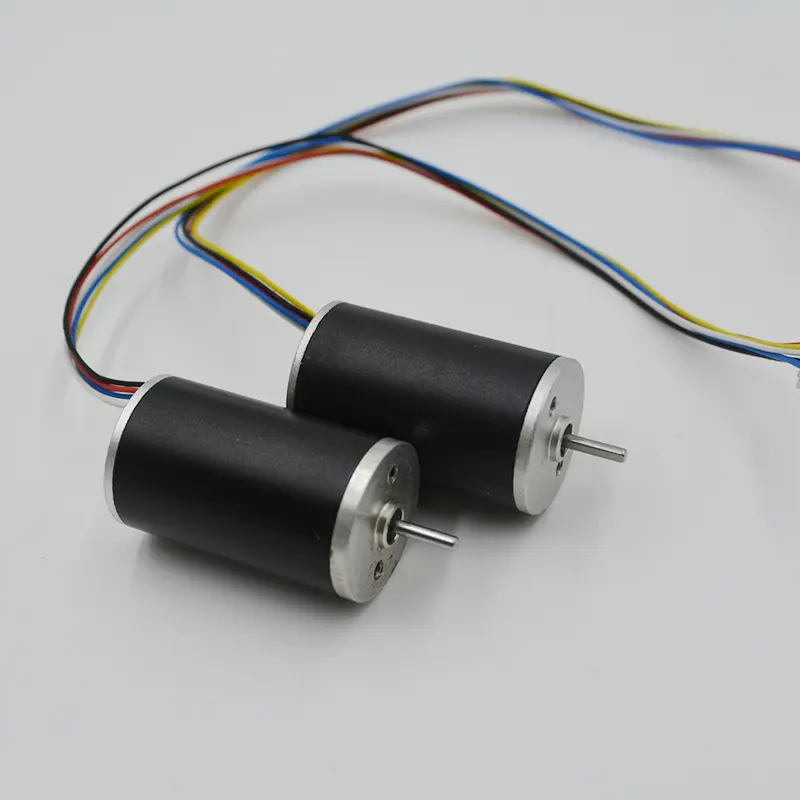
Key Takeaways
Coreless DC motors are lighter because they do not have an iron core. This helps them speed up and slow down quickly.
These motors work very well. They can be up to 90% efficient. This means they use less energy and make less heat.
Coreless motors run smoothly. They make little noise and shake less. This makes them good for things like medical devices and robots.
People use them in small, powerful devices. Some examples are drones, cameras, and electric cars. They are small and react fast.
When picking a coreless motor, think about how well it works. Make sure it fits jobs that need speed and accuracy.
Coreless DC Motor Basics
What Is a Coreless DC Motor
A coreless dc motor is a kind of brushed DC motor. It is different from regular motors. The rotor does not have an iron core. The windings make a hollow cylinder that holds itself up. The copper wires are wrapped in a basket or honeycomb shape. Without an iron core, the rotor is much lighter. This makes the motor speed up and slow down very fast. No iron means less energy is lost as heat. The motor can be up to 90 percent efficient. Coreless dc motors are great for things that need quick moves and smooth action. You can find them in robots, drones, and medical tools. In these places, every bit of weight and time is important.
Note: Not having an iron core makes the motor lighter. This helps it start and stop very quickly. That is why it is good for jobs that need high performance.
Key Features
Coreless dc motors are special because of how they are built and how they work. Here are some main things you will notice:
The rotor has copper wires wound in a basket shape to make a hollow cylinder.
The motor is very light and has low inertia, so it reacts fast.
It can start and stop quickly, which is good for fast tasks.
The design stops cogging, so the motor runs smooth with little noise or shaking.
No iron core means less sparking and less electromagnetic interference, so the motor lasts longer.
Many coreless motors use rare earth magnets, so they can be small but still strong.
Here is a table that lists some features and what they do:
Feature Description | Benefit |
No iron core in the rotor prevents cogging, resulting in smooth rotation. | Minimum noise and vibration during operation. |
Utilizes rare earth magnets and a basket configuration for miniaturization. | Allows for smaller motor designs with high performance. |
Lightweight and superior quick starting/stopping capabilities. | High speed response for rapid adjustments. |
Coreless dc motors are efficient, run smoothly, and are small. These things make them a good pick for many new devices.
Alternative Names
Coreless dc motors can have other names in different places. Some common names are:
Coreless motors
Air core motors
Slotless motors
Ironless motors
Some books or papers may call them "Coreless Permanent Magnet Synchronous Motors (CPMSM)." This name is used in special areas like electric cars. No matter what they are called, they all have the same main design and benefits.
How Coreless DC Motors Work
Construction
Coreless motors look different from regular motors. The rotor does not have an iron core. Instead, copper wires are wrapped in a basket or honeycomb shape. This makes a hollow cylinder that holds itself up. Epoxy resin keeps the wires in place. This makes the rotor strong and tough. Rare earth magnets, like neodymium, are used in the stator. These magnets help make a strong magnetic field. The motor stays small because of this.
Here is a table showing some materials used in coreless dc motors and their purpose:
Material | Purpose |
Epoxy resin | Holds the winding design in place |
Rare earth magnets | Used in the stator for brush motors |
Internal magnets | Serve as the rotor part in brushless motors |
The hollow rotor makes the motor lighter. It also lowers inertia. This means the motor speeds up and slows down faster. The basket-wound coil lowers winding inductance. This helps the motor run smooth and reduces sparking.
Tip: The special way coreless motors are built gives them high efficiency and quick response. This makes them great for things that need exact movement.
Working Principle
Coreless dc motors use a cylindrical magnet as the stator. This magnet makes a magnetic field. The field interacts with the current in the rotor windings. When you turn on the power, current flows through the basket-shaped coils. The magnetic field pushes against the current in the rotor. This makes torque. Torque spins the rotor and makes the motor work.
Let’s break down the process:
The cylindrical magnet is the stator.
It makes the magnetic field for the rotor.
The rotor windings carry current and meet the magnetic field.
This makes torque, which spins the rotor.
The rotor is light and has no iron core. This lets coreless motors change speed quickly. You get smooth motion and less shaking. The design also cuts down sparking between the brushes and commutator. This helps the motor last longer.
Differences from Traditional Motors
There are some big differences between coreless dc motors and regular iron-cored motors. The main difference is the rotor. Coreless motors have a hollow cylinder with no iron core. Regular motors use an iron core to hold the wire coils.
Here is a table comparing the two types:
Feature | Coreless DC Motor | Conventional Iron-Cored DC Motor |
Armature Structure | No iron core, self-supporting cylinder | Iron framework supporting wire coils |
Friction | Reduced due to absence of iron core | Higher due to iron core |
Weight | Lighter | Heavier due to iron core |
Lifespan | Longer due to reduced stress | Shorter due to higher stress |
Magnetic Interference | None | Possible interference |
Operation Smoothness | Smoother and quieter | Can be less smooth |
Coreless dc motors can be up to 90% efficient. There is less energy loss because there is no iron core. The lighter rotor means lower inertia. The motor reacts faster. You also get less cogging, so the motion is smoother. These things make coreless motors great for fast and exact jobs like robots and medical tools.
New materials have made coreless motors even better. Stronger magnets give more torque and better efficiency. Better cooling lets the motor run at higher power. Electronic controllers now give more exact control over the motor.
Note: The newest coreless motors are smaller, lighter, and work better than before. You will see them in many new devices that need fast and accurate movement.
Advantages and Disadvantages
Benefits of Coreless Motors
Coreless motors have many good points. They work very well and can be up to 90% efficient. These motors use less power because there is no iron core. The rotor is light, so the motor reacts fast. You can start and stop it quickly. This is helpful when you need speed.
Here is a table that compares coreless dc motors to other types:
Feature | Coreless DC Motors | Other Motor Types |
Design | Lightweight, no iron core | Typically heavier, with iron core |
Inertia | Low inertia, faster response | Higher inertia, slower response |
Current Loss | Less current loss, higher efficiency | More current loss, lower efficiency |
Power Consumption | Lower power consumption | Higher power consumption |
Application Suitability | High-precision, high-frequency control | General applications |
Coreless motors make less noise and shake less. The basket-wound coil stops cogging, so the motor moves smoothly. You can use these motors in tight spaces. Engineers pick coreless motors for drones, robots, and medical tools. The high power-to-weight ratio is great for planes and lab equipment.
Here is another table that shows the good and bad sides in real life:
Advantages | Disadvantages |
High power-to-weight ratio | Perceived higher cost |
Elimination of cogging |
|
Low rotor inertia |
|
Ideal for applications in aviation |
|
Efficient operation in limited spaces |
|
Quick acceleration for laboratory equipment |
|
Tip: Coreless motors are best when you need fast moves, smooth action, and low weight.
Limitations
There are some things to think about before you pick a coreless dc motor. These motors can cost more than regular ones. Cheap coreless motors use brushes that wear out fast. They may last less than 20 hours if used a lot. Good brands like Faulhaber or Maxon last much longer. They can run for hundreds of hours with little brush wear. If you buy cheap motors, you might need to fix them often.
Cheap coreless motors have brushes that wear out quickly and may last less than 20 hours if used a lot.
Better brands, such as Faulhaber and Maxon, can run for hundreds of hours with little brush wear, so they last longer.
You may need to do more maintenance with cheaper motors because of brush wear, which makes them less durable.
Coreless motors may not work for every job. They are best for tasks that need quick moves and low weight. They are not good for heavy-duty work. Always check the motor ratings before you use them.
Most designs work best at the bottom 25% of the max number on the spreadsheet. If you run the motor near the top, it will likely break over time.
You need to think about cost, how long the motor lasts, and how well it works. Coreless dc motors are great for the right jobs, but you should know their limits.
Applications of Coreless DC Motors
Common Uses
Coreless motors are found in lots of new devices. Their special design makes them good for small spaces. They are also great when you need things to be light. Here are some places you see them:
Drones and unmanned aerial vehicles (UAVs)
Robotics and advanced driver-assistance systems (ADAS)
Medical devices, such as dialysis pumps and CPAP machines
Electric power steering systems in cars
Precision-guided munitions
Battery-powered consumer electronics, like cameras and compact gadgets
Industrial automation, including conveyor systems
Coreless dc motors are used a lot in medical tools, electronics, and factories. Their light weight and smart design help machines work better. You will see them in electric cars and robots. They are also used in airplanes and lab equipment, where every bit of weight matters.
Why Choose Coreless Motors
Coreless motors are a good pick if you want fast and efficient machines. They are lighter because they do not have an iron core. This helps them speed up quickly and give more power. In battery devices, coreless motors save energy and make batteries last longer. They are 15–25% more efficient than regular motors. This helps small gadgets work better.
In drones and robots, coreless motors help things move smoothly and fast. Their design lowers resistance, so devices use less power. This is important for long trips or when you want your robot to run longer. The small size and light weight let you put them in tight spots. You also get exact control and quick moves, which is important in medical and airplane jobs.
Tip: If you need a motor for a job where space, weight, and efficiency matter, coreless motors are often the best choice.
You can find electric motors in many modern devices. Coreless designs help things move exactly how you want in robots, medical tools, and electronics.
Many companies pick these motors because they are light and speed up fast.
More robots and smart gadgets mean more people use these motors.
Medical tools need them because they work well and do not shake much.
Advantage/Limitations | Description |
Lightweight Rotor | Makes it easy to speed up or slow down. |
High Efficiency | Does not get very hot when running. |
Precision Applications | Works well in robots and medical tools that need quick and exact moves. |
If you know what these motors can and cannot do, you can pick the best one for your needs.
FAQ
What makes a coreless DC motor different from a regular DC motor?
You will notice that a coreless DC motor has no iron core in its rotor. This design makes the motor lighter and lets it respond faster. You get smoother motion and less vibration compared to regular DC motors.
Can you repair a coreless DC motor if it stops working?
You can repair some coreless DC motors, but many small models are hard to fix. The basket-wound coil and tiny brushes make repairs tricky. Most people replace the motor instead of fixing it.
What are the main coreless dc motor types?
You will find brushed and brushless coreless DC motor types. Brushed motors use brushes for current flow. Brushless motors use electronic controllers. Each type works best for different devices and needs.
Where should you use a coreless DC motor?
You should use a coreless DC motor in devices that need quick starts, low weight, and smooth motion. Drones, medical tools, and robots often use these motors for their high efficiency and fast response.


