Samarium Cobalt Sensors: A Reliable Promise to Conquer Extreme Environments
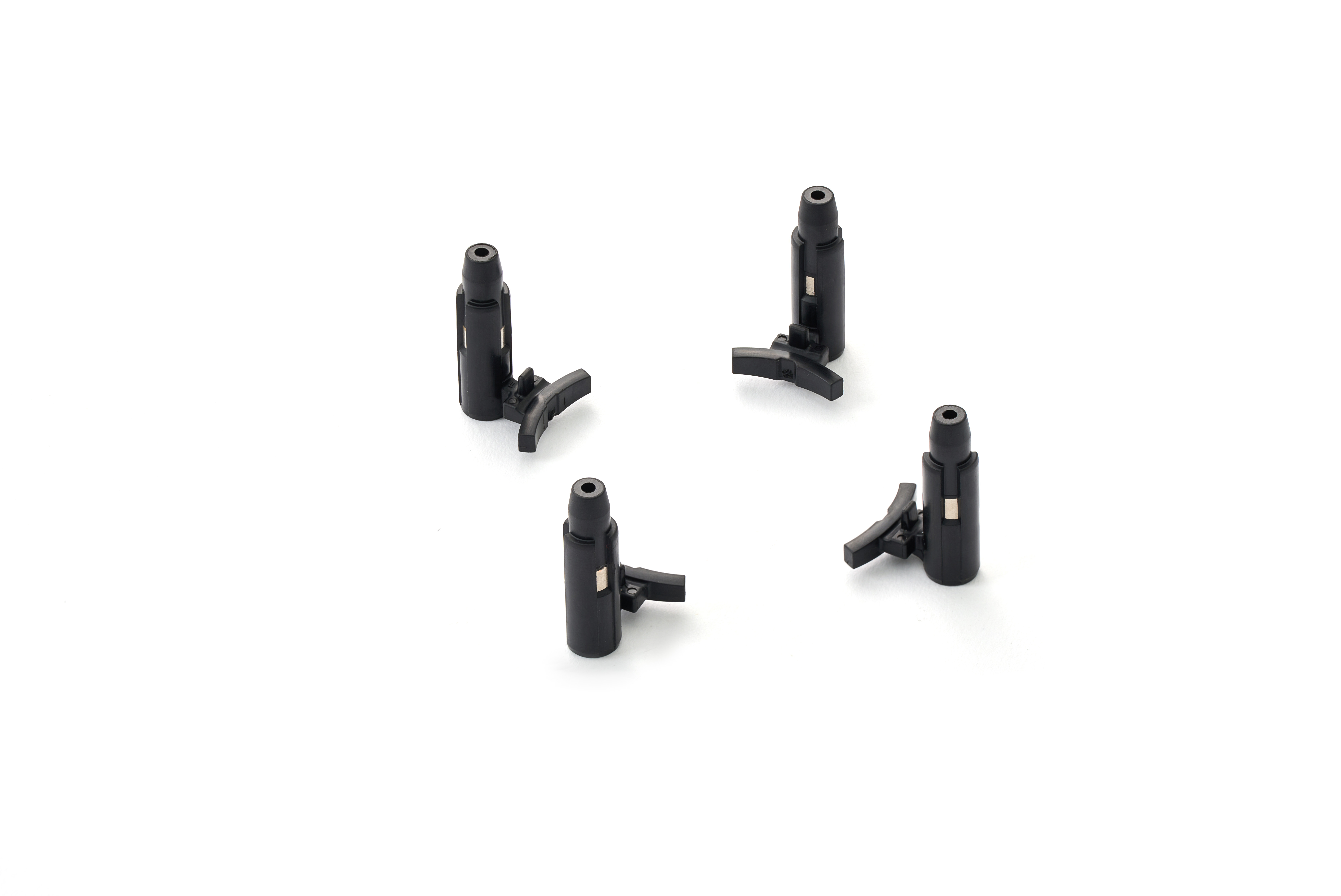
Amidst the roaring rockets launching from the Gobi Desert, robots silently traversing deep wells thousands of meters underground, and fighter jets maneuvering skillfully at high altitudes—behind these scenes of human exploration at the limits, a critical yet often overlooked component works silently.
This material can maintain stable performance in high-temperature environments exceeding 300°C, in stark contrast to conventional magnets that demagnetize under high heat. Its magnetic energy product of up to 30 MGOe sets a record among rare-earth permanent magnet materials, while its performance degradation in high-radiation environments is less than one-tenth that of other materials.
01 The Core of Samarium Cobalt: Why It Can Conquer Extreme Environments
Samarium cobalt permanent magnet materials are a unique force among rare-earth permanent magnet materials. Compared to the more widely known neodymium iron boron, samarium cobalt possesses distinctive material properties that make it an irreplaceable choice for extreme environments.
Composed of the rare-earth element samarium and the transition metal cobalt, this material is produced through specialized powder metallurgy processes. Its crystal structure is typical of a hexagonal system, endowing it with exceptionally high anisotropic fields and magnetocrystalline anisotropy constants.
In terms of technical specifications, samarium cobalt permanent magnets can operate at temperatures as high as 350°C, with a coercivity temperature coefficient of -0.03%/°C, significantly lower than neodymium iron boron's -0.12%/°C. This means that in environments with drastic temperature fluctuations, samarium cobalt magnets can maintain more stable performance.
Another key advantage is exceptional corrosion resistance. Samarium cobalt permanent magnets inherently exhibit excellent corrosion resistance, eliminating the need for surface coatings like those required for neodymium iron boron. This characteristic allows them to function reliably in humid, salty, or otherwise corrosive environments over extended periods.
Below is a comparison of key performance metrics for mainstream permanent magnet materials:
Performance Metric | Samarium Cobalt (SmCo) | Neodymium Iron Boron (NdFeB) | Alnico (AlNiCo) |
Maximum Operating Temperature | 250–350°C | 80–200°C | 450–550°C |
Coercivity | Very High | Extremely High | Low |
Corrosion Resistance | Excellent | Requires Coating Protection | Excellent |
Magnetic Energy Product | Medium to High | Extremely High | Medium |
Temperature Stability | Excellent | Poor | Good |
These properties make samarium cobalt materials an ideal choice for sensing applications in extreme environments, particularly where temperature, radiation, or corrosive conditions coexist.
02 Aerospace Applications: The Unwavering Guardian of Precision Guidance
On June 16, 2012, the Long March 2F launch vehicle successfully deployed the Shenzhou 9 spacecraft into its intended orbit. Behind this historic moment, a critical component—the samarium cobalt permanent magnet radiation ring—played a vital role in the rocket’s guidance system.
This seemingly inconspicuous ring-shaped part is installed in the gyroscope of the rocket’s control platform, precisely regulating motor speed to adjust the rocket’s flight direction and ensure accurate orbital insertion.
Since the 1980s, samarium cobalt permanent magnet radiation rings have been utilized in the Long March series of launch vehicles. Proven through hundreds of successful launches, the reliability of this material in aerospace applications is well-established.
The extreme conditions of space demand sensing materials with multiple specialized capabilities: resistance to intense vibration and shock during launch, tolerance to high radiation levels in space, and adaptability to extreme temperature cycling (from Earth’s surface temperatures to the deep cold of space).
Samarium cobalt excels in these areas. Its low-temperature coefficient ensures stable magnetic performance amid drastic temperature changes; its high coercivity prevents demagnetization under strong external magnetic interference; and its exceptional structural stability withstands the immense acceleration and vibrations during launch.
Beyond launch vehicles, samarium cobalt sensors play key roles in satellite attitude control, space probe navigation, and precision instruments aboard space stations. They provide accurate position, orientation, and motion data, serving as critical “windows” for spacecraft to perceive their external environment.
03 Deep-Well Exploration: Reliable Navigators of the Underground World
In the oil and gas industry, precise downhole exploration is directly tied to the efficiency and safety of resource extraction. With advancements in automation, autonomous downhole robots have become key tools for enhancing operational efficiency. The “eyes” and “navigation systems” of these robots often rely on sensors capable of reliable performance in extreme downhole environments.
In February 2023, at a Middle Eastern exhibition for oil, gas, and geosciences, researchers showcased a novel magnetic sensor system for autonomous downhole robot navigation. This system provides precise positioning for robots in environments several kilometers underground.
Downhole conditions are as harsh as those in space: temperatures can exceed 200°C, pressures reach hundreds of atmospheres, corrosive fluids and gases are present, and space is extremely limited. Traditional navigation technologies like GPS are entirely ineffective at such depths.
Samarium cobalt sensors demonstrate unique value in such scenarios. The system developed by researchers integrates miniaturized magnetometer chips with permanent magnets, detecting casing collars and residual magnetic field characteristics to achieve precise positioning and speed measurement for downhole robots.
This samarium cobalt permanent magnet-based sensor system performed exceptionally well in a test well at a depth of 1,450 feet, clearly identifying casing collar positions and matching data provided by professional logging companies.
For the energy industry, such reliable sensing technology translates to more efficient and safer exploration operations. Autonomous downhole robots reduce human intervention, lower health and safety risks, and improve time and cost efficiency.
04 Defense and Military: The Sensitive Nerves of Fighter Jets and Missiles
In modern defense systems, control precision often determines mission success. Whether it’s the agile maneuvers of fighter jets or the precise guidance of missiles, highly reliable and precise sensing technology is essential.
Modern control actuation systems convert electronic command signals into mechanical motion, governing aerodynamic surfaces, valves, and other critical subsystems of aircraft. In this process, magnetic sensors provide position, speed, and directional feedback, forming the core of closed-loop control systems.
Defense platforms face extreme environments, including: rapid temperature fluctuations from high-altitude cold to engine-area heat, high G-forces from rapid maneuvers, intense vibrations, and corrosive conditions like salt spray and sand.
Samarium cobalt magnets are an ideal choice for defense applications due to their exceptional thermal stability. For example, in missile fin actuators and control systems, samarium cobalt permanent magnets deliver the torque and precision needed for rapid course corrections. These systems, paired with magnetic encoders, enable real-time position feedback within compact, rugged enclosures.
Unmanned aerial vehicle (UAV) flight control systems also benefit from samarium cobalt sensing technology. UAV platforms demand high performance while adhering to strict size and weight constraints. Samarium cobalt solutions minimize magnetic interference and reduce power consumption through efficient actuator and sensor designs, supporting flexible flight control.
05 SDM Samarium Cobalt Sensors: A Reliable Promise
As a leading Chinese manufacturer of high-performance permanent magnets and magnetic components, SDM serves multiple critical industries, including aerospace, defense, and energy exploration.
The advantages of SDM samarium cobalt sensors are reflected across multiple dimensions. In materials, a strategic partnership with Aluminum Corporation of China ensures a robust supply chain for rare-earth raw materials. In manufacturing, advanced powder metallurgy techniques guarantee uniform microstructure and consistent magnetic performance.
SDM’s product line covers a full range from basic samarium cobalt magnets to complex magnetic assemblies, meeting customized needs for diverse application scenarios.
Every SDM samarium cobalt sensor undergoes rigorous environmental adaptability testing, simulating extreme conditions such as space launches, deep-well operations, and high-speed flight. These tests ensure reliable performance in real-world applications, fulfilling the promise to “orbit with satellites, explore deep wells, and soar with fighter jets.”
Looking to the future, SDM will continue investing in samarium cobalt sensor technology R&D, focusing on further enhancing performance stability in extreme environments, reducing size and weight, and expanding into new application areas. From space exploration to underground resource development, from national defense to precision manufacturing, SDM samarium cobalt sensors will continue to play a critical role in humanity’s journey to explore the limits.


