What Is AlNiCo Ring Magnet?
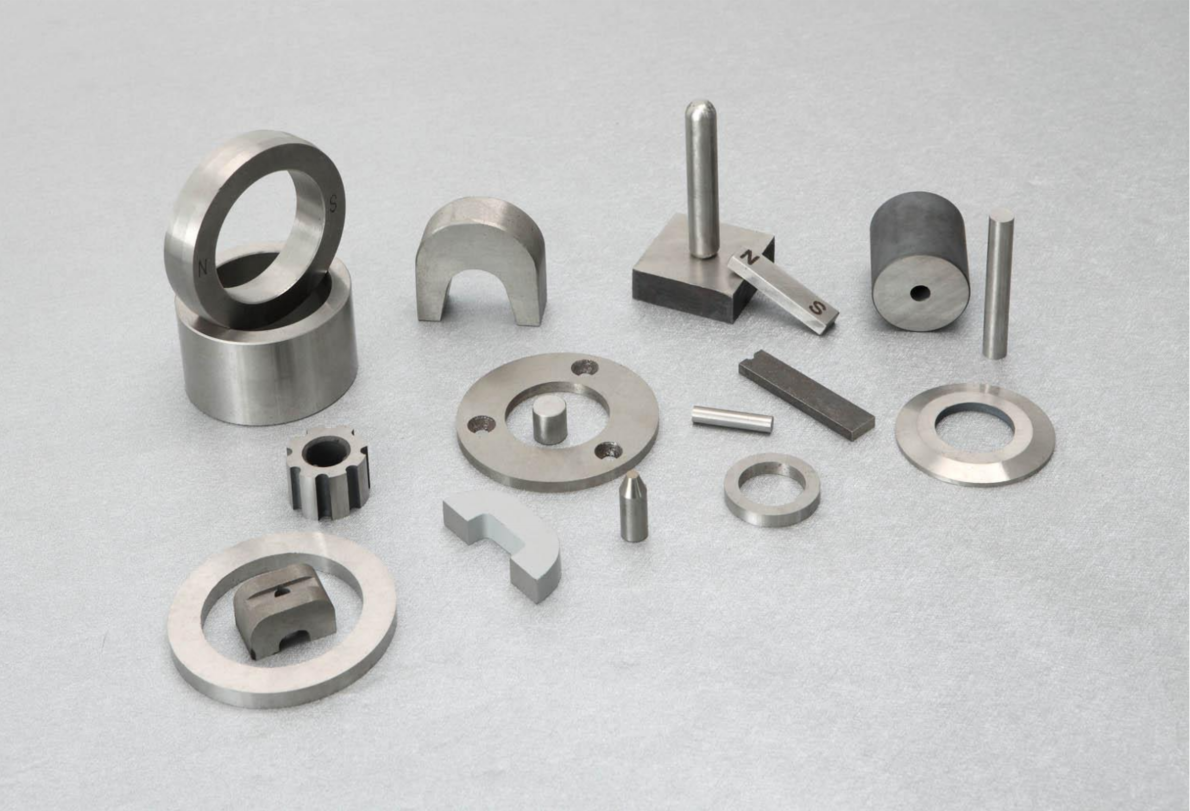
AlNiCo ring magnets are circular, ring‑shaped permanent magnets with a central hole, manufactured from aluminum‑nickel‑cobalt (AlNiCo) alloys. They are available in both cast and sintered forms, making them one of the most widely used non‑rare‑earth permanent magnet materials.
These ring magnets are primarily composed of aluminum, nickel, cobalt, and iron, with additional elements such as copper, titanium, and niobium added to precisely adjust magnetic properties and coercivity. First developed in 1931, AlNiCo magnets were dominant in the permanent magnet industry before rare‑earth magnets were introduced.
Defined by outer diameter (OD), inner diameter (ID), and thickness (T), AlNiCo ring magnets feature excellent temperature stability and can operate reliably at temperatures up to 550°C. Cost‑effective and available in a wide range of sizes, they are widely used in speakers, electric motors, sensors, instruments, magnetic clamping, magnetic couplings, and aerospace equipment.
Manufacturing Process of AlNiCo Ring Magnet
AlNiCo ring magnets are mainly produced through two mature processes: casting and sintering.
In the casting process, molten aluminum-nickel-cobalt alloy is poured into pre-shaped molds to form rough ring blanks. After solidification, the blanks undergo heat treatment to enhance magnetic properties, followed by precision grinding, machining, and surface finishing to meet tight dimensional requirements for outer diameter, inner diameter, and thickness.
In the sintering process, fine AlNiCo powder is compacted under high pressure into a green ring shape, then sintered at high temperature to achieve densification. Sintered AlNiCo ring magnets feature higher dimensional accuracy and smoother surfaces, making them suitable for mass production of small and medium-sized rings.
Both processes deliver stable magnetic performance, high temperature resistance, and strong resistance to demagnetization, ideal for industrial applications.
Magnetization Directions of AlNiCo Ring Magnet
AlNiCo ring magnets can be magnetized in different directions to meet various functional requirements.
The most common type is axial magnetization, where the magnetic field runs parallel to the central axis of the ring, creating distinct north and south poles on the two flat circular surfaces.
Another typical type is radial magnetization, in which the magnetic field extends outward or inward from the central hole toward the outer diameter, forming poles on the inner and outer circumferences.
Some special AlNiCo ring magnets can also be processed with multipole magnetization for more complex magnetic circuits. The choice of magnetization direction directly affects performance in motors, sensors, speakers, and magnetic clamping systems, ensuring efficient and stable operation.
Magnetic Properties of Cast Alnico Magnet
| Grade | Remanence Br | Coercivity Hcb | Max. Energy Product (BH)max | Temp. Coefficient Tk | Curie Temp. | Max Working Temp. | MMPA Equivalent |
| mT | Gs | kA/m | Oe | kJ/m³ | MGOe | %/°C (Br) | %/°C (Hcj) | (°C) | (°C) |
| LN10 | 600 | 6000 | 40 | 500 | 10 | 1.2 | -0.02 | -0.03 | 810 | 450 | Alnico 3 |
| LNG12 | 700 | 7000 | 44 | 550 | 12 | 1.5 | -0.02 | -0.03 | 810 | 450 | Alnico 2 |
| LNG13 | 680 | 6800 | 48 | 600 | 13 | 1.63 | -0.02 | -0.03 | 810 | 450 | Alnico 2 |
| LNG18 | 900 | 9000 | 48 | 600 | 18 | 2.25 | -0.02 | -0.03 | 850 | 450 | Alnico 4 |
| LNG37 | 1200 | 12000 | 48 | 600 | 37 | 4.63 | -0.02 | -0.03 | 860 | 525 | Alnico 5 |
| LNG40 | 1250 | 12500 | 48 | 600 | 40 | 5 | -0.02 | -0.03 | 860 | 525 |
| LNG44 | 1250 | 12500 | 52 | 650 | 44 | 5.5 | -0.02 | -0.03 | 860 | 525 |
| LNG52 | 1300 | 13000 | 56 | 700 | 52 | 6.5 | -0.02 | -0.03 | 860 | 525 | Alnico 5DG |
| LNG60 | 1330 | 13300 | 60 | 750 | 60 | 7.5 | -0.02 | -0.03 | 860 | 525 | Alnico 5-7 |
| LNGT18 | 580 | 5800 | 90 | 1130 | 18 | 2.25 | -0.02 | -0.03 | 860 | 550 | Alnico 7 |
| LNGT28 | 1000 | 10000 | 58 | 720 | 28 | 3.5 | -0.02 | -0.03 | 860 | 525 | Alnico 6 |
| LNGT32 | 800 | 8000 | 100 | 1250 | 32 | 4 | -0.02 | -0.03 | 860 | 550 | Alnico 8 |
| LNGT38 | 800 | 8000 | 110 | 1380 | 38 | 4.75 | -0.02 | -0.03 | 860 | 550 |
| LNGT44 | 850 | 8500 | 120 | 1500 | 44 | 5.5 | -0.02 | -0.03 | 860 | 550 |
| LNGT48 | 900 | 9000 | 120 | 1500 | 48 | 6 | -0.02 | -0.03 | 860 | 550 |
| LNGT60 | 950 | 9500 | 110 | 1380 | 60 | 7.5 | -0.02 | -0.03 | 860 | 550 |
| LNGT72 | 1050 | 10500 | 112 | 1400 | 72 | 9 | -0.02 | -0.03 | 860 | 550 | Alnico 9 |
| LNGT88 | 1100 | 11000 | 115 | 1450 | 88 | 11 | -0.02 | -0.03 | 860 | 550 |
| LNGT36J | 700 | 7000 | 140 | 1750 | 36 | 4.5 | -0.02 | -0.03 | 860 | 550 | Alnico 8HC |
Magnetic Properties of Sintered Alnico Magnet
| Grade | Remanence Br | Coercivity Hcb | Max. Energy Product (BH)max | Temp. Coefficient Tk | Curie Temp. | Max Working Temp. | MMPA Equivalent |
| mT | Gs | kA/m | Oe | kJ/m³ | MGOe | %/°C (Br) | %/°C (Hcj) | °C | °C |
| FLN8 | 500 | 5000 | 40 | 500 | 9 | 1.13 | -0.02 | -0.03 | 760 | 450 | Alnico 3 |
| FLNG12 | 700 | 7000 | 48 | 600 | 12.4 | 1.55 | -0.02 | -0.03 | 810 | 450 | Alnico 2 |
| FLNGT18 | 600 | 6000 | 90 | 1130 | 18 | 2.2 | -0.02 | -0.03 | 860 | 450 | Alnico 7 |
| FLNG34 | 1200 | 12000 | 48 | 600 | 34 | 4.25 | -0.02 | -0.03 | 890 | 450 | Alnico 5 |
| FLNG37 | 1250 | 12500 | 48 | 600 | 37 | 4.63 | -0.02 | -0.03 | 890 | 450 |
| FLNGT28 | 1050 | 10500 | 60 | 600 | 28 | 3.5 | -0.02 | -0.03 | 850 | 450 | Alnico 6 |
| FLNGT38 | 800 | 8000 | 120 | 1500 | 38 | 4.75 | -0.02 | -0.03 | 850 | 450 | Alnico 8 |
| FLNGT42 | 880 | 8800 | 120 | 1500 | 42 | 5.25 | -0.02 | -0.03 | 820 | 450 |
| FLNGT36J | 700 | 7000 | 140 | 1750 | 33 | 4.13 | -0.02 | -0.03 | 850 | 450 | Alnico 8HC |
*The above-mentioned data of magnetic properties and physical properties are given at room temperature.
*The max working temperature of magnet is changeable due to length-diameter ratio, coating thickness and other environment factors.
Applications of Alnico Magnets
Electric Motors: Due to their high temperature resistance and stability, Alnico magnets are used in electric motors, particularly those in automotive and aerospace applications where performance at extreme temperatures is required.
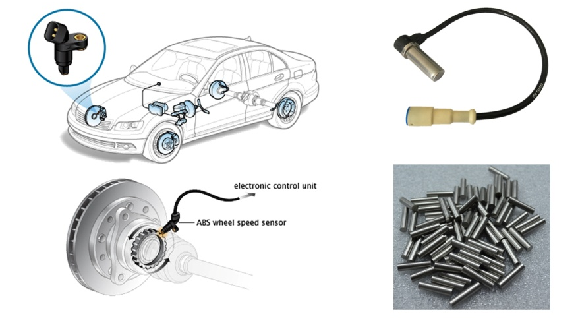
Sensors and Instruments: Their stability makes them suitable for certain sensor applications, including Hall effect sensors, as well as in precision instrumentation where consistent performance is crucial.
Generators: Alnico magnets are used in small generators and are particularly useful in applications involving high heat and requiring stable performance.
Guitar Pickups: One of the more common uses in consumer products, Alnico magnets are favored in the construction of guitar pickups due to their ability to provide a warm, clear tone.
Loudspeakers: They are also used in loudspeakers and other acoustic transducers for their ability to produce a rich sound quality, benefiting from the magnet's characteristics to enhance audio fidelity.
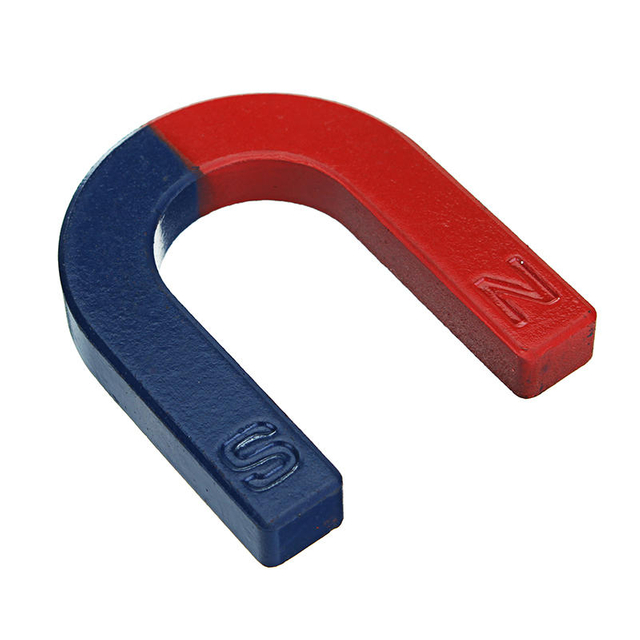
Educational Tools and Experiments: Alnico magnets are often used in educational settings for demonstrations in physics and other science classes due to their strong magnetic fields and durability.
Magnetic Bearings and Couplings: These applications benefit from Alnico's ability to maintain magnetic properties over a range of temperatures and environmental conditions.
Typical Applications of Alnico Magnet

Geophone
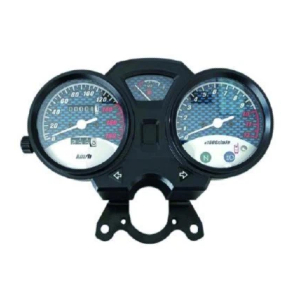
Speedometer
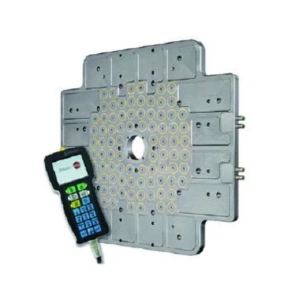
Magnetic Clamping System
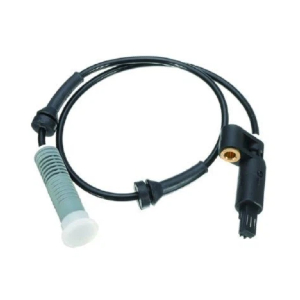
Wheel Speed Sensor
Overall, Alnico magnets are prized for their temperature stability and resistance to demagnetization, making them ideal for high-temperature and precise applications where maintaining magnetic performance is critical. Their unique properties and reliability continue to make them valuable in a wide range of industrial and consumer products.